The End of a 10-Million-Year Affair: How Our Relationship with Alcohol Is Changing
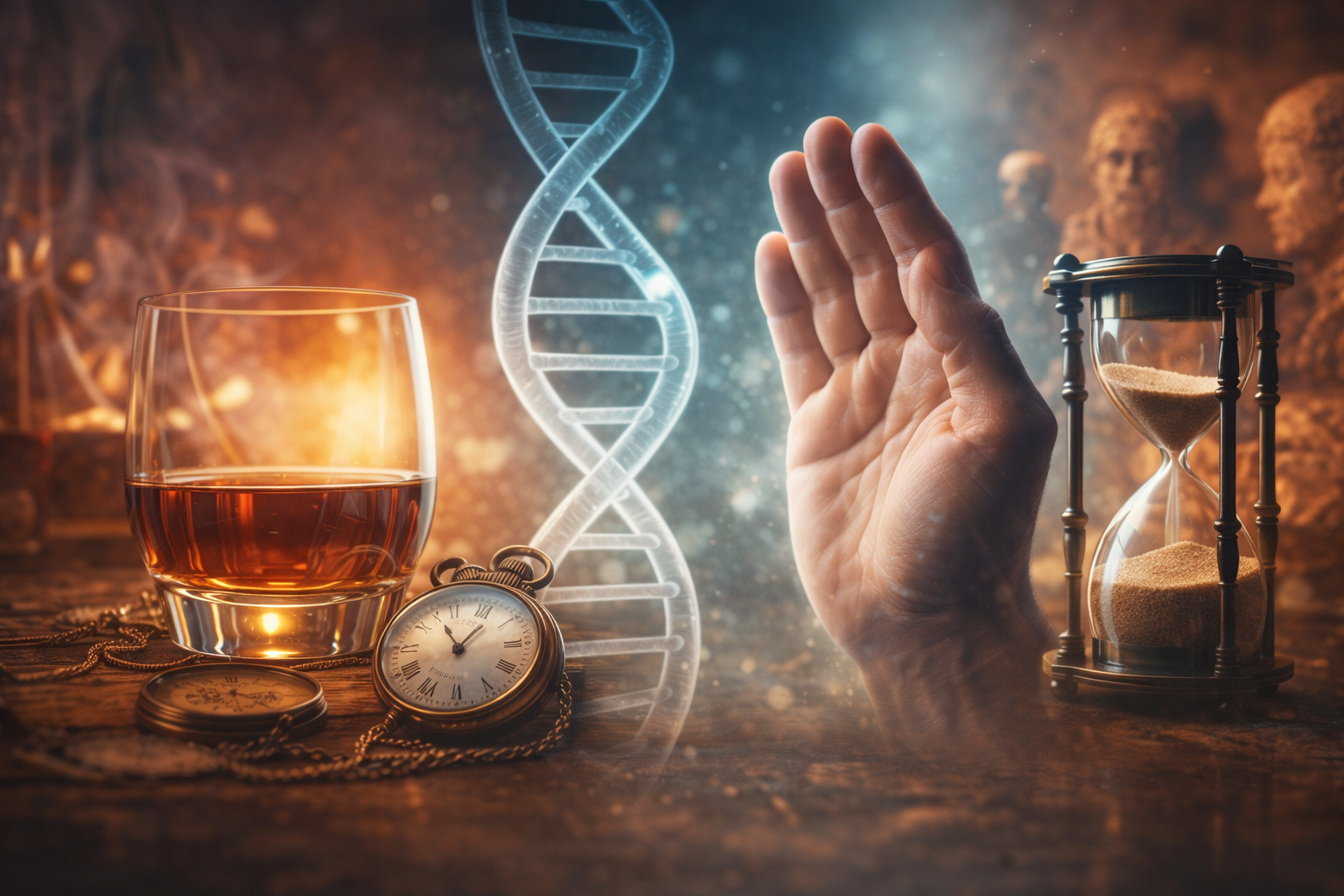
It’s not just a drink. It’s not just a habit. It’s a relationship that goes way back.
For most of our history, alcohol has acted as social glue, ritual, celebration, and even a tool for holding increasingly large groups together. And yet, something is shifting.
This piece isn’t about praising or condemning alcohol. It’s about understanding why we’ve always drunk… and why we may now be drinking less.
1. A romance older than humanity
About ten million years ago, an ancestor shared by humans, chimpanzees and gorillas developed a curious mutation: the ability to metabolise alcohol more efficiently.
That small change coincided with a big shift: spending less time in trees and eating fallen fruit… already fermented.
This is the root of the drunken monkey hypothesis: being attracted to alcohol was adaptive. It signalled high-energy fruit — and survival was energy.
We didn’t begin drinking because of culture; we began because of biology.
2. Alcohol as social infrastructure
As human groups grew, individual memory could no longer hold them together. A challenge emerged: how do you trust people you don’t know?
Alcohol offered an unexpected answer.
- It lowers inhibitions.
- Triggers endorphins.
- Boosts connection and empathy.
- Makes music, laughter and conversation easier.
It turned strangers into something closer to community. That’s also a form of infrastructure.
It’s no surprise that Mesopotamia, Egypt, Greece, China or the Maya built rituals, celebrations and even economies around it.
3. The other side of the deal
The downside was always there. Today we know that alcohol:
- causes over 1.8 million deaths per year,
- increases the risk of several cancers,
- disrupts sleep, memory and emotional regulation.
For years, “moderate drinking is healthy” was widely repeated — but many studies compared moderate drinkers with people who had stopped drinking due to illness. A massive bias.
The WHO’s stance is now unambiguous: no amount of alcohol is completely safe.
4. Are we reaching “peak booze”?
Consumption is dropping across most developed countries, especially among younger generations.
The reasons keep stacking up:
- less face-to-face socialising, more digital,
- a growing focus on sleep and wellbeing,
- the economic and physical cost,
- and a new factor: GLP-1 medication dampens alcohol-related reward.
For the first time, humanity may be drinking less not out of prohibition… but out of preference.
5. The NoLo wave and the “high without consequences”
The industry has moved fast, splitting in three directions:
1. NoLo: no alcohol or low alcohol
What used to be the “sad beer” is now a rapidly expanding category — and surprisingly decent.
2. Functional drinks
Ginseng, ashwagandha, L-theanine, rhodiola… blends designed to:
- relax,
- energise,
- or support social flow
without toxicity or hangover. Not alcohol, but some effects come close.
3. Personalised neurochemistry
This is where the true frontier is emerging:
- Alcarelle (GABA Labs): a molecule replicating calming effects without harming the body,
- neutral ingredients that add “functions” to any drink,
- custom combinations: a cola that calms, a lemonade that lifts.
If you can choose how you want to feel without damaging your health… what becomes of traditional alcohol?
6. A more sober future… but not a less human one
We won’t stop toasting, celebrating or sharing drinks. The cultural symbolism runs deep.
But it does seem likely that:
- alcohol-free drinking becomes entirely normal,
- “green highs” or functional drinks become mainstream,
- GLP-1 medication reduces excessive patterns,
- moderation returns as the default.
Perhaps we move closer to those primates who drank occasionally, not habitually.
7. A personal closing note
This topic interests me because, beyond chemistry, it reflects a deeper cultural shift.
It speaks of:
- new ways of socialising,
- a different relationship between body and mind,
- and a moment in which technology starts reshaping habits we thought were fixed.
For ten million years, alcohol has been there in moments of connection, creativity and community. Now we’re beginning to ask whether we can keep the best parts… without paying the full price.
Maybe the next cultural leap isn’t quitting alcohol, but learning to feel better with more intelligence, more freedom and less harm.
