The Art of Starting Badly
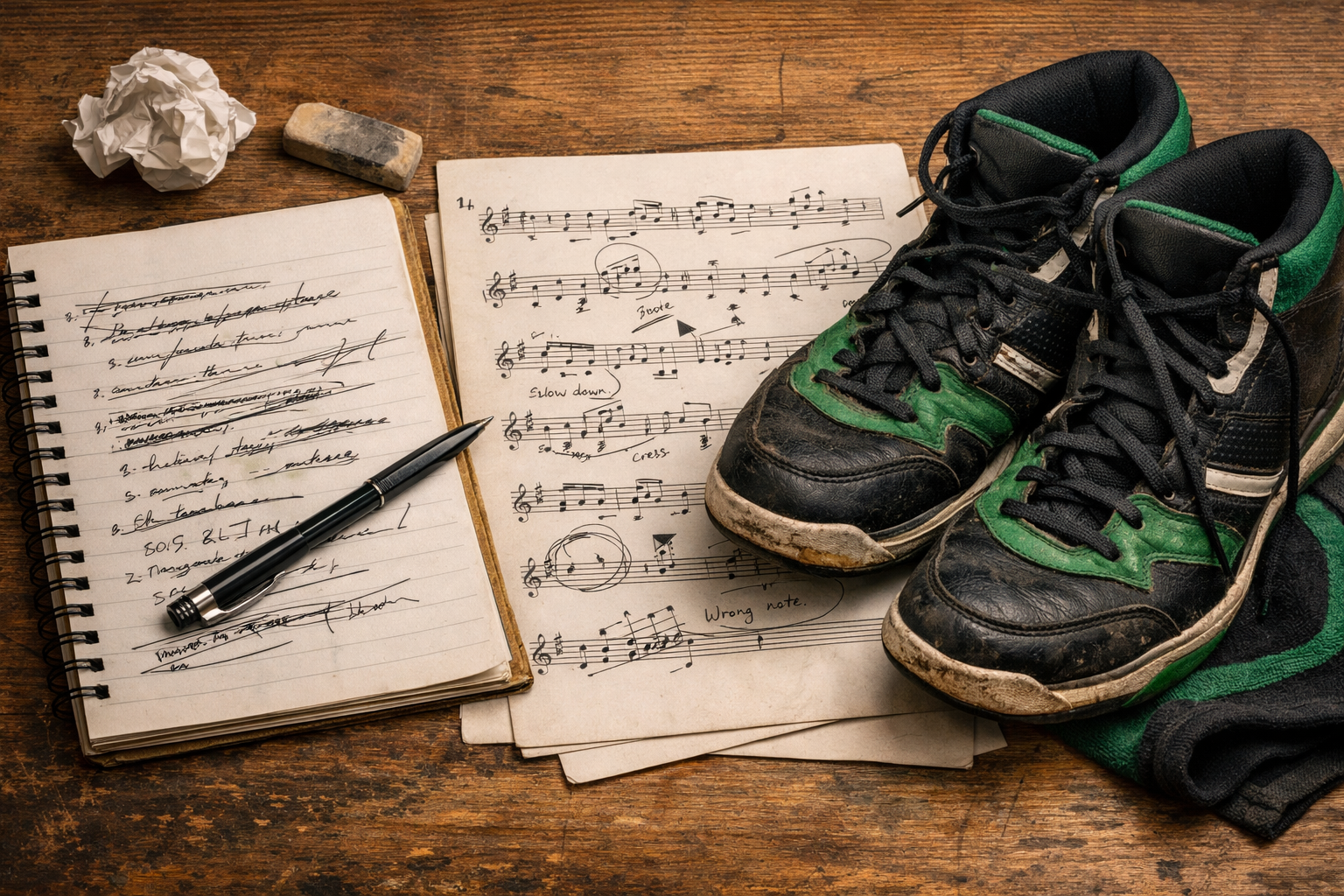
First versions are almost never brilliant.
They’re awkward. Uneven. A little uncomfortable.
And yet, necessary.
Singing off-key
Years ago I said something quite absurd:
“Rehearsing is for cowards.”
I said it half joking. Half serious.
Now I see it differently.
Rehearsing is courage.
Because it means accepting that at the beginning, it doesn’t sound good.
You’re off-key. You fall short. Your body doesn’t know yet.
Without that margin of error, there’s no music.
Writing badly before writing well
Writing also starts crooked.
The first draft is usually more noise than clarity.
Then you trim. Adjust. Reorder.
Gradually something more solid appears.
Technology helps me iterate faster.
But even with help, the first version is rarely the final one.
I’m experiencing it with the book I’m working on —“1/3 of the Journey”— and with projects like legoodanfitrion.com.
Version one is never the last version.
Training without epic music
The same happens with the body.
Early workouts aren’t inspiring.
No soundtrack. No instant transformation.
There’s clumsiness. Short breath. Consistency.
Improvement comes later.
Not as explosion, but as accumulation.
Iteration is part of the craft
Starting badly isn’t a flaw in the process.
It is the process.
Waiting until you feel completely ready is often a refined way of not starting.
I’ve learned to tolerate that imperfect first version.
To see it as a draft, not a verdict.
As a starting point, not a diagnosis.
The permission to be clumsy
There’s something freeing about accepting that the beginning won’t be brilliant.
There will be rehearsal. Correction. Adjustments.
And that doesn’t invalidate the path.
On the contrary.
It legitimizes it.
Frequently Asked Questions (FAQs)
- Shouldn’t we wait until something is perfect before launching?
Waiting for perfection is often a sophisticated way of postponing. Publishing imperfectly allows real iteration and improvement.
- Does starting badly damage credibility?
It depends. With honesty and consistent improvement, evolution strengthens credibility instead of weakening it.
- How do I know if I’m iterating or just improvising?
Iteration means reviewing, adjusting and learning from each version. Improvisation repeats without reflection.
- Does this apply to both personal and professional projects?
Yes. Every creative or physical process begins with some awkwardness before it finds shape.
