Preparing the Soil (Even When Nothing Is Growing Yet)
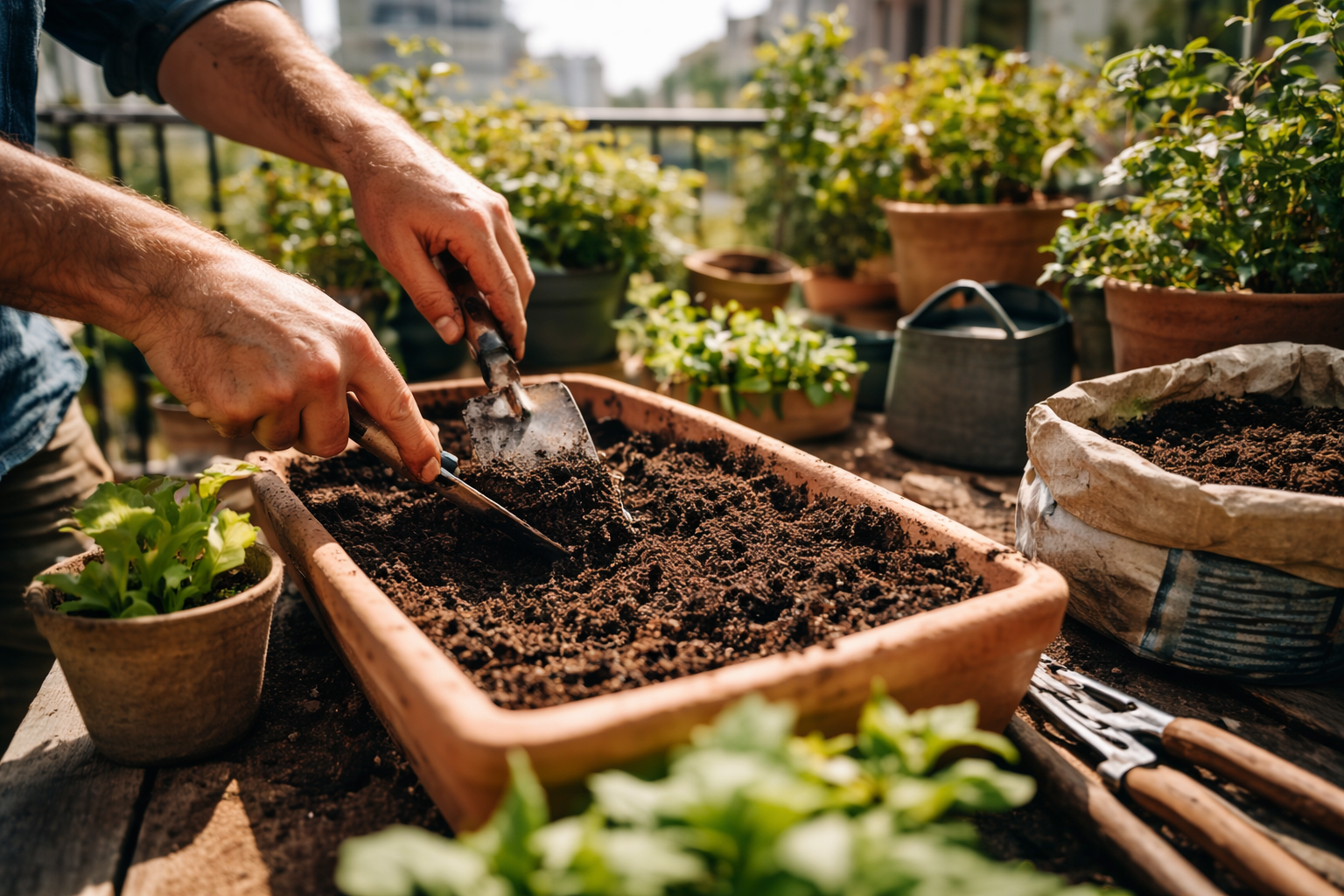
Spring doesn’t begin when something sprouts.
It begins when you decide to prepare the soil.
On my terrace, that means emptying pots, loosening the substrate, mixing compost, clearing dry leaves, and checking irrigation.
For a few days, there are no flowers. No fruits. Nothing to show.
Only invisible work.
The Part You Don’t See
We love the sprouting moment.
The red tomato. The fragrant basil. The first open flower.
But real growth starts earlier.
The tomato, for instance, isn't just a fruit — it's a teacher of patience. What growing tomatoes taught me comes back to me every single season.
- Aerating compacted soil.
- Removing old roots.
- Adding nutrients.
- Adjusting drainage.
Without that, what grows is fragile.
The Body Has Seasons Too
With seasonal change, my skin usually reminds me.
Nervous eczema appears when temperature or humidity shifts.
It’s not dramatic.
It’s a signal.
The body is adjusting.
Just like the soil.
Demanding performance isn’t enough. Preparation matters.
Shorter Transitions
I feel that springs are shorter.
The jump from cold to heat feels abrupt.
The margin for adaptation seems thinner.
Which means paying closer attention.
Not only to the garden.
But to myself.
Prepare Before You Demand
The same applies professionally.
We want visible results.
But without clearing, structuring, and revisiting foundations, growth is unstable.
Preparing the soil isn’t wasted time.
It’s accepting that what matters happens before it becomes visible.
Structural Patience
Spring doesn’t respond to impatience.
It responds to cycles.
The soil needs time. The skin needs adjustment. The body needs transition.
And maybe we do too.
Preparing even when nothing seems to grow is an act of trust.
Not in immediate results.
But in the process.
Frequently Asked Questions (FAQs)
- Why is preparing the soil important before planting?
Visible growth depends on invisible groundwork: aerating, fertilizing, and balancing the soil.
- How is gardening similar to the body?
Both operate in cycles. Preparation determines how they respond to seasonal change.
- Why can spring affect the skin?
Changes in temperature, humidity, and light alter the skin’s balance and may trigger conditions such as eczema.
- How can this idea apply professionally?
Investing in structure and preparation before demanding visible results leads to more sustainable growth.
