Changing Seasons Means Changing Rhythm
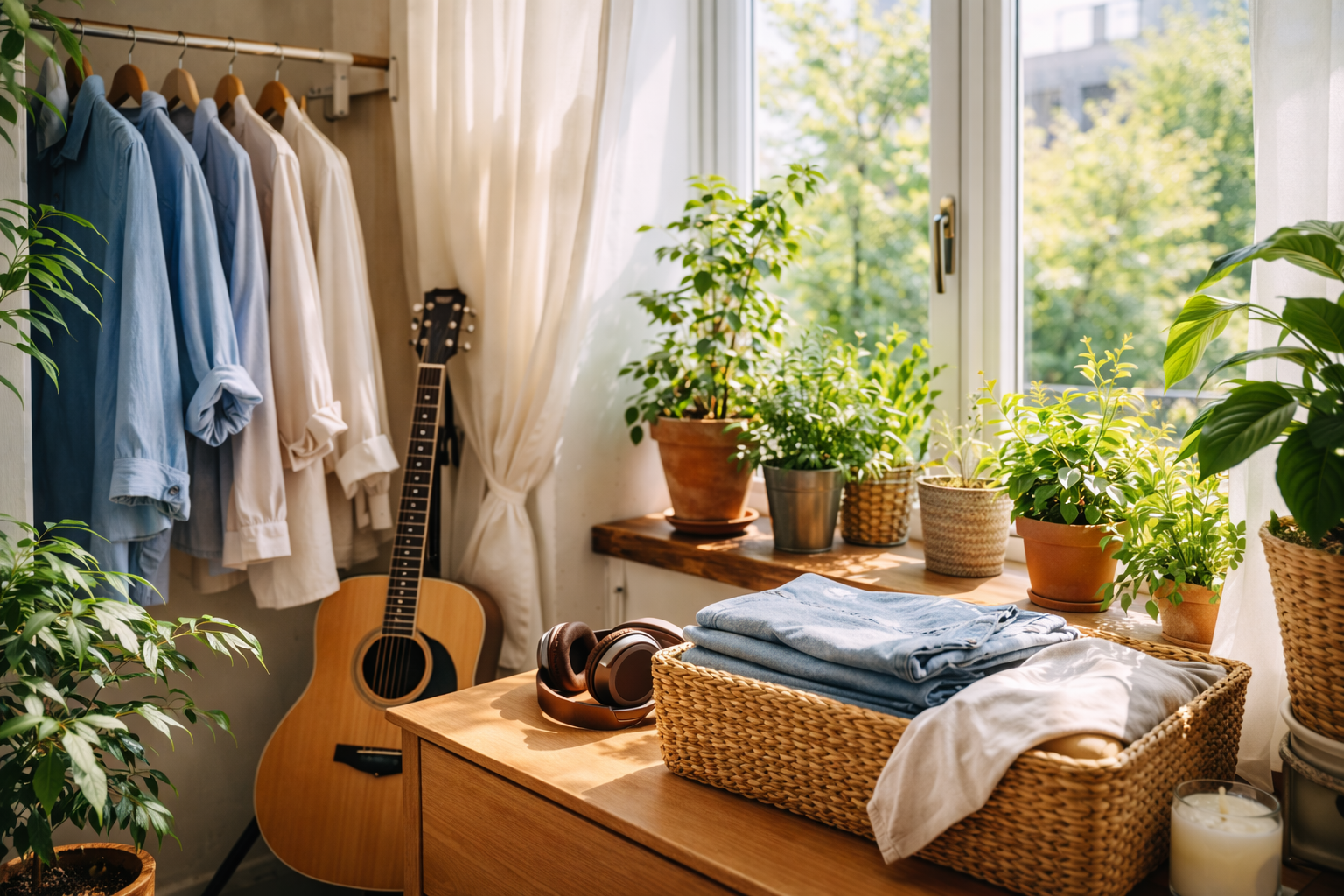
Changing seasons isn’t just a calendar fact.
It’s a shift in rhythm.
No dramatic statements. No epic resolutions.
Small adjustments.
The Wardrobe Knows
Packing away coats. Bringing out lighter shirts.
That simple act shifts the energy of a room.
And yours too.
The House Changes
More natural light. Open windows. Maybe different lighting at night.
Small details.
But the body notices.
The Playlist Moves
I don’t listen to the same music in January as in March.
Winter asks for introspection. Spring begins to ask for movement.
It’s not rational.
It’s seasonal.
The Garden, Practically Speaking
On the terrace, decisions:
- What to remove.
- What to keep.
- What to plant.
Not everything grows all year.
Some cycles end. Others begin.
We Are Not Linear
We like to think we should perform the same way all year.
Same energy. Same clarity. Same intensity.
But that’s not how we work.
We are seasonal.
Sowing phases. Maintenance phases. Pruning phases. Harvest phases.
Adjusting rhythm creates flow.
Gentle Forward Movement
Changing seasons isn’t starting over.
It’s continuing differently.
With more light.
With a different tempo.
With different energy.
We are not linear.
We are seasonal.
And that’s a very natural way to move forward.
Frequently Asked Questions (FAQs)
- Why do seasonal changes affect mood?
Light, temperature, and daily schedules directly influence biological rhythm and energy.
- Is it useful to make small home adjustments with each season?
Yes. Adjusting your environment helps you align with change rather than resist it.
- What can be planted in spring in an urban garden?
Herbs, tomatoes, lettuces, and short-cycle crops usually adapt well at the start of spring.
- What does it mean that we are not linear?
Our energy fluctuates. Adapting to cycles is more sustainable than forcing rigid consistency.
